
High-ticket dropshipping is often described as selling expensive products without keeping every item in a warehouse. That definition is technically true, but it leaves out the part that makes or breaks the business. The model works only when the supplier, the customer promise, and the store’s operating process line up.
When the product is high value, you do not get much room to hide behind a generic storefront. Customers expect clear answers on fit, delivery, warranty, return options, and what happens after money changes hands. The supplier is a central part of every one of those answers.
That is why I prefer a supplier-first view of high-ticket dropshipping. Start with an audience and product category you can understand. Find credible supply paths. Learn the policies and delivery reality. Then build the store around what you can actually support. It is less glamorous than launching a huge catalog, but it gives you a far better chance of building something that lasts.
For a broad explanation of the model, use the complete high-ticket dropshipping guide. This article looks at the operating decisions that matter once you move from the idea of a store to the work of getting products, suppliers, and customers to fit together.
Start with suppliers that fit your category. Get the shared supplier spreadsheet, recruiting video, outreach scripts, and Google Workspace/GMass setup training. Research companies by name, category, markets served, and website. Find current contact details on each supplier’s website.
Your path to a supplier-ready business
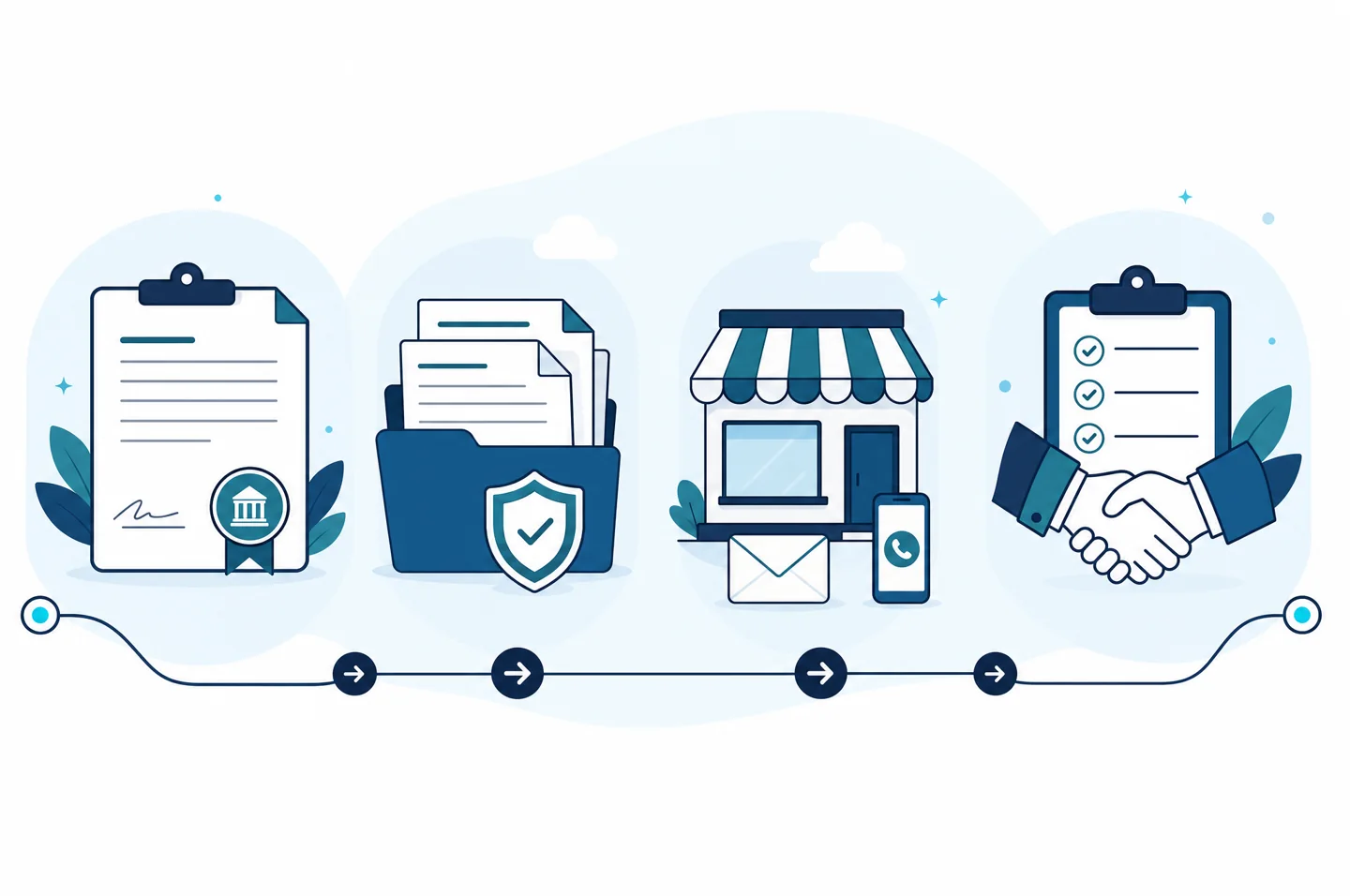
- 1. Choose your structure
- 2. Organize documents
- 3. Prepare your store
- 4. Apply with context
High-ticket means a bigger customer promise
A higher price changes the purchase decision. Customers usually take longer to compare options, ask more specific questions, and care more about the details around delivery and support. They may be buying an item that needs a room measurement, an installation plan, a freight appointment, a compatibility check, or a clear warranty path.
That means your store has to do more than display a price and a checkout button. It has to help the buyer make a confident decision. If you cannot explain a product, a delivery process, or a policy in a straightforward way, the gap will show up as abandoned orders, support tickets, chargebacks, and unhappy customers.
The supplier relationship is what makes that customer promise real. A good supplier gives you usable product information, a clear order process, reliable communication, and an escalation route when something goes wrong. A weak supplier can make a beautiful site look unreliable within one difficult order.
Think of high-ticket dropshipping as a retail business with distributed fulfillment, not a shortcut around retail responsibility. You still own the customer experience. You just need to make sure the people fulfilling the product can support the experience you are marketing.
Choose a category you can learn deeply
The easiest mistake is going wide too early. A large catalog can feel like progress, but it makes everything harder: supplier outreach, product education, customer support, policy management, content creation, and fulfillment troubleshooting.
Start with a category that has a real customer problem behind it. Look for a buyer who needs help choosing, a product family with understandable differences, and a sales process you can describe in plain language. A price tag alone does not create a high-ticket opportunity.
The high-ticket niches list is a useful place to generate options. Use it to identify categories, then pressure-test each one with supplier availability, product complexity, service burden, shipping requirements, and competitive reality.
The Small Business Administration’s market research framework is worth applying here. It pushes you to consider demand, pricing, competition, market saturation, and customer characteristics. That is better than deciding a niche is attractive because a few products have high advertised prices.
Research the supplier landscape before designing the store
Before you buy a domain, write product descriptions, or obsess over a theme, build an evidence-based view of the supplier landscape. Who makes the products? Who distributes them? Which brands appear in specialist stores? Which companies publish dealer information? Which companies look like they can support online retailers?
A directory is helpful at this stage because it reduces the time required to find potential manufacturers, brands, and distributors. The Supplier Paradise supplier spreadsheet is built for that purpose. Search the shared spreadsheet for a company or category. Download a personal copy for filters and notes. It does not replace direct verification, and it should never be treated as proof of approval or dropshipping availability.
For each lead, record the source, company role, product fit, dealer contact route, any online sales language, and the question you still need answered. That last column is important. It prevents you from silently turning a missing fact into a favorable assumption.
Supplier availability should influence the category choice early. If a niche has no clear supplier path, unclear channel rules, or demands a stock commitment you cannot safely carry, find that out before you build the whole store around it.
Build the business that suppliers are willing to approve
Start with our business formation and supplier-readiness guide to organize the entity details, documents, and contact information your application may need. Use the essential resource stack to keep your setup focused.
Suppliers are deciding whether you will protect their brand and support their customers. They are not only deciding whether you can send a payment. Your application should make it easy to understand what you are building and why you are a sensible retail partner.
Have a professional business email, a clean domain, accurate business details, and a short explanation of your category focus. Be ready to provide the documents a supplier may reasonably request. The business formation checklist covers the basic legal and financial groundwork that should be in place before you begin serious outreach.
Many suppliers will ask for a federal tax ID or related business documentation. The IRS explains what an Employer Identification Number is and how it is used as a federal business tax ID. Your own legal and tax requirements depend on your situation, so use qualified professional guidance where needed. The practical point is simply to get your core documentation organized before it becomes a last-minute obstacle.
Do not inflate your size or claim experience you do not have. A new retailer with a focused plan, accurate documentation, and a thoughtful customer approach can be more credible than someone promising instant scale with no system behind it.
Make unit economics visible before you add products
Margin is not the same as a viable business. You need to understand the full cost of serving an order: wholesale price, payment processing, shipping or freight, handling, advertising, returns, warranty exposure, customer support, and the time needed to resolve exceptions.
Work through a realistic order example. Start with the customer-facing price. Subtract the product cost, the actual shipping arrangement, payment fees, a conservative marketing cost, and a reserve for support or returns. If the result only works under perfect assumptions, the product is not ready for a big launch.
With high-ticket products, small surprises can be expensive. A delivery surcharge, a residential freight issue, a supplier handling fee, a damaged item, or a long replacement cycle can eat a large share of apparent profit. This is why you want to understand the supplier’s written terms before you start advertising aggressively.
The supplier payment terms guide helps you look at the cash side of the relationship. It is not enough to make a sale on paper. You need to know when your cash goes out, what evidence you have before the next payment, and what happens if an order changes.
Choose the sales channel and say it clearly
How you sell affects which suppliers will work with you. A brand may approve your own ecommerce site while restricting marketplace listings. Another may allow online sales but require you to maintain certain product information or service standards. A third may only work with retailers that hold inventory.
Be direct in your outreach. Explain whether you are building a specialist store, which country you will serve, how the product will be presented, and whether the supplier would ship to the end customer. You are trying to establish fit early, not talk your way into an approval that will create conflict later.
Good channel clarity protects both sides. The supplier knows how the brand will be represented. You know what you can market and where. That foundation makes it much easier to plan content, pricing, and customer communications without constantly worrying that you are crossing an unknown policy line.
If you are still choosing suppliers, the high-ticket supplier research guide walks through the application and shortlist process in detail.
Start with suppliers that fit your category. Get the shared supplier spreadsheet, recruiting video, outreach scripts, and Google Workspace/GMass setup training. Research companies by name, category, markets served, and website. Find current contact details on each supplier’s website.
Build product pages from operational truth
A strong product page should not be a lightly edited supplier brochure. It should answer the questions a serious buyer needs answered before they are comfortable moving forward. That includes who the item is for, what problem it solves, important specifications, sizing or fit information, what is included, what is not included, delivery expectations, warranty information, and what support looks like after purchase.
Only promise what you can confirm. If the supplier has not confirmed a lead time, do not state a precise lead time as fact. If white-glove delivery is available only in certain areas, make that clear. If product imagery or claims are subject to brand rules, follow the approved materials.
The Federal Trade Commission states in its advertising and marketing guidance that advertising claims must be truthful, not deceptive or unfair, and backed by evidence. In practical terms, do not make a product sound more capable than the documentation supports. A specific, honest page earns more trust than a page that tries to promise everything.
Save the supplier source for every important specification and policy. When the customer asks a detailed question, you want to know where your answer came from and who can verify it if needed.
Plan the delivery experience before the order arrives
High-ticket dropshipping often involves more than a parcel arriving at the front door. Products may ship by freight, require a scheduled appointment, need an adult present, arrive curbside, or require the customer to inspect for visible damage before signing.
That is not a reason to avoid the category. It is a reason to prepare. Ask the supplier how a normal order moves from payment to delivery. Ask who sends tracking, what service level is used, whether the customer gets a call, how damage is documented, and what happens when an item needs replacement.
Then translate that process into customer-facing language. A buyer should understand what happens after checkout without needing to email you for basic information. Clear delivery guidance reduces anxiety and gives your support team a standard to work from.
One of the best early investments you can make is a post-purchase communication sequence that confirms the order, restates any important delivery requirements, explains the next milestone, and gives the customer an easy way to ask a question. That work often matters more than adding ten extra products.
Treat policies as part of the product
MAP rules, return conditions, warranty procedures, and channel restrictions are not boring back-office paperwork. They shape the buying experience and the economics of the store.
For example, a strict MAP policy can make pricing more stable, but you need to know how customers receive discounts if any are permitted. A limited return policy may be reasonable for a made-to-order item, but customers need to see that before they buy. A strong warranty can be a major sales asset, but only if you can explain how a claim actually starts.
Ask for current policies in writing and store the version you received. When terms change, update your product pages and internal notes. The relationship gets much easier when your marketing, your checkout expectations, and the supplier’s documented process tell the same story.
The supplier negotiation checklist can help when there is a genuine issue to discuss. The goal is not to pressure a supplier into a promise they cannot keep. It is to clarify the terms that let both sides serve the customer properly.
Start with an assortment that you can support
Your first catalog should prove a system, not try to dominate a category. Choose a narrow assortment with clear buyer fit and manageable variations. Learn the products well enough to answer questions. Make sure every product has enough usable information, a credible supplier path, and a support process you understand.
Then expand based on evidence. Add related products when customers ask for them, when the supplier relationship proves reliable, or when a clear gap appears in your offer. This keeps your content and support burden under control while you learn what actually converts.
High-ticket stores often benefit from depth instead of breadth. A store that helps a defined buyer choose among a focused set of products can earn more trust than a large catalog where every item feels copied from a different supplier.
When you do add a supplier, use the supplier onboarding checklist to turn approval into a controlled operating relationship. Account access, pricing, contacts, ordering instructions, shipping rules, and escalation paths should not live only in someone’s memory.
Build a repeatable quote-to-order workflow
Some high-ticket purchases need a conversation before checkout. A customer may want help with fit, compatibility, delivery timing, or a custom configuration. That is not a weakness. It is a chance to provide the kind of guidance a generic store cannot.
Create a simple process for those requests. Gather the product, destination, desired timing, essential specifications, and any relevant use case. Confirm the assumptions with the supplier. Then reply to the customer with a clean, documented recommendation rather than a rushed answer.
Use the same structure internally so that a second team member can follow it. The RFQ template gives you a starting point for requesting comparable information from a supplier. It is especially useful when freight, custom options, or lead times need to be confirmed before you quote the buyer.
As the store grows, a documented quote-to-order workflow helps you see where the process is slow, where customers get stuck, and what information should be added to the site before they ask.
Keep a record of what the supplier has actually confirmed
Supplier relationships generate a lot of information: price lists, inventory notes, delivery promises, policies, account rules, product specifications, and informal answers from sales reps. If this information lives only in email threads, it will become difficult to operate consistently.
Create a simple supplier record for each relationship. Save the current contacts, account status, price source, policy links, shipping notes, warranty path, product data location, and important unanswered questions. Update it when you learn something new.
Before a meaningful first order, use the supplier audit checklist to reconcile your notes with the actual quote and order process. You are checking whether the public promise on your store still matches the commercial and operational reality.
This is not bureaucracy for its own sake. It is how you avoid telling a customer one thing, finding out another thing from a supplier, and then trying to solve the problem under pressure.
Measure what is happening, not what you hoped would happen
After launch, review the business at the level of actual orders. How long do customers take to decide? Which questions appear before purchase? Where do quotes stall? What is the real delivery experience? How often do you need supplier support? Which products create high support effort relative to revenue?
Use that evidence to improve the store, the supplier list, and the catalog. Maybe you need clearer delivery language. Maybe one brand has weak product data. Maybe a particular customer segment values a different feature than you expected. These are useful findings, not failures.
Do not expand your marketing budget faster than your operations can handle. The goal is to create a repeatable process that can survive a higher volume of orders, not a short burst of traffic that exposes every missing detail.
When the foundation is solid and you want help accelerating a complete store build, Ecommerce Paradise’s turnkey service can provide a practical path from niche and supplier research through launch. It is a fit for people who want structured support, not a substitute for understanding their own customer and category.
Final takeaway
High-ticket dropshipping is a real retail model, but it rewards preparation. The store must reflect what the supplier can deliver. The supplier relationship must support what the customer is promised. And the category needs enough depth for you to become genuinely useful rather than another site copying a catalog.
Go deep before you go wide. Research supplier access early, make the unit economics visible, write from operational truth, and use the first orders to improve the system. That approach is not flashy, but it is how a high-ticket store earns customer trust and builds a foundation it can actually scale.
For the complete supplier discovery and approval sequence, use the step-by-step guide to finding high-ticket dropshipping suppliers. It is a useful companion when you are moving from category research into direct supplier outreach.
For a practical place to begin the supplier side of this model, use the best high-ticket dropshipping suppliers pillar and work through the category-specific research leads.
Build a supplier shortlist you can act on
Use the shared spreadsheet and recruiting training to build your shortlist. Find current contacts on supplier websites, then confirm eligibility, products, prices, inventory, fulfillment, and terms directly.

Trevor Fenner is the founder of Ecommerce Paradise and writes about high-ticket dropshipping, supplier research, and building niche ecommerce stores. His Supplier Paradise guides help you compare suppliers, prepare dealer applications, and check shipping, returns, and warranty policies before you commit. Start with the supplier research guides and build a shortlist you can verify.
Join the Ecommerce Paradise community and follow Ecommerce Paradise on LinkedIn.