Business foundations · Supplier readiness
Set up your business before you apply to suppliers.
Found a brand you want to sell? Get the business details, documents, and online presence ready so you can approach that supplier with a clear plan.
Start with the right business structure. Then build a simple application packet you can adapt for each brand. You do not need a huge software stack to get this done.
Affiliate disclosure: we may earn a commission when you buy through partner links on this page. Read our affiliate disclosure.
Your path to a supplier-ready business
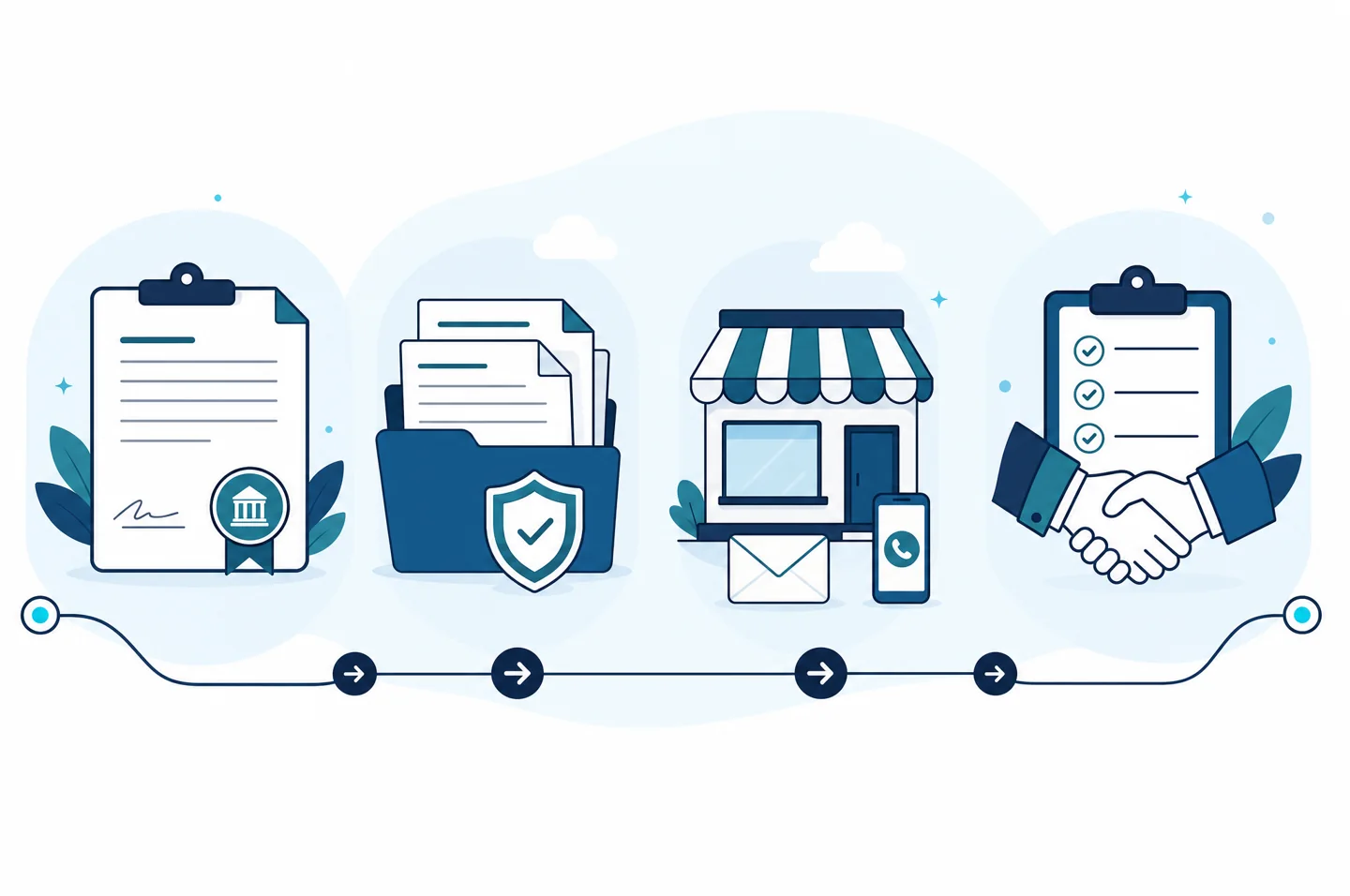
- 1. Choose your structure
- 2. Organize documents
- 3. Prepare your store
- 4. Apply with context
Think like the person reviewing your dealer application.
A supplier needs to understand who will sell its products, where those products will appear, and how customers will be supported. A clear business identity helps you answer those questions consistently.
Imagine applying to a patio furniture brand. Your legal business name is one thing, your website uses another name, and your email comes from an unrelated personal address. Those details may have a reasonable explanation, but leaving the supplier to figure it out creates extra back-and-forth.
Your goal is a straightforward introduction: this is our business, this is our niche, these are our sales channels, and this is how we plan to represent your brand.
Formation is one part of readiness. Supplier requirements vary. An LLC is not universally required, and filing one does not guarantee approval.
1. Choose the structure that fits your business.
Before paying for a filing package, decide how the business should be organized. A sole proprietorship, LLC, and corporation have different implications for administration, liability, and taxes.
Start with the SBA business launch guidance and your state’s official filing authority. If ownership, residency, or tax circumstances make the decision complicated, get advice for your situation.
If you choose an LLC or corporation, complete the appropriate state registration before applying for that entity’s EIN. Keep the approved formation documents in your business records.
A store name and a legal entity name do not have to be identical in every situation. If you use a different trading name, check the applicable DBA requirements and explain the relationship clearly on applications.
Do not pick a state just because somebody calls it the cheapest place to form an LLC. Where you operate may create registration and ongoing obligations elsewhere. Compare the full setup and annual obligations before deciding.
2. Use Northwest as your starting point for formation.
Our primary recommendation
Northwest Registered Agent
Northwest Registered Agent is our first recommendation when you want help forming your business. Its formation and registered-agent services give you a practical place to start while you work on your store and supplier plan.
Review the filing service, state fees, registered-agent renewal, and optional services before checking out. Confirm exactly which address uses are included for your state and circumstances.
You can also file directly through the relevant state agency. A filing service is a convenience, not a requirement for every founder.
Other formation services to compare
Northwest remains our first choice. These alternatives give you other package and support options to evaluate if you have a specific preference.
Bizee
An alternative for comparing online formation packages. Look at the total cost after state fees, optional add-ons, and renewals.
Compare Bizee packagesLegalZoom
An alternative if you want to explore formation alongside other legal-service offerings. Check what is included in the package you select.
Compare LegalZoom formation optionsMyCompanyWorks
Another formation service to compare for filing assistance and ongoing business services. Review the current package details and recurring costs.
Compare MyCompanyWorks packagesService packages can change. Compare current checkout terms instead of choosing solely from an introductory headline price.
3. Separate formation, your EIN, and resale paperwork.
These documents solve different problems. Putting them all under “business license” makes supplier applications more confusing than they need to be.
Formation documents
Show the entity created through your state filing, if you operate through an LLC or corporation. Save the approved documents and use the entity name consistently.
EIN
A federal tax identification number. The IRS issues EINs free directly; a third party may charge to assist you.
Use the official IRS EIN instructions to check eligibility and the appropriate application method.
Sales-tax and resale documents
These are separate from formation and the EIN. Requirements and accepted forms depend on the jurisdiction and the transaction.
Check your state’s revenue agency and ask the supplier exactly which valid document it needs.
A supplier asking for a resale certificate is not necessarily asking for your LLC certificate or EIN letter. Confirm the request instead of sending every document you have.
Keep tax IDs and identity documents private. Share only what is required through a verified supplier’s appropriate application process, not in public store pages or open folders.
4. Use the right address for the right purpose.
A registered-agent address, mailing address, operating address, and return address serve different purposes. Do not assume one service covers all four.
Your registered agent receives designated legal notices. A virtual mailbox can help you handle mail. A bank or supplier may separately need the actual location where your business operates.
If remote mail handling would help, compare Anytime Mailbox locations and services. Check the chosen location’s fees and whether the intended use is accepted before signing up.
A mailbox is not a warehouse or a freight return center. Agree on returns and damaged shipments with each supplier before telling customers where to send anything.
5. Organize the business finances.
Keep business income and expenses organized from the beginning. Have the documents requested by your chosen financial provider ready, and use accurate ownership and address information.
Explore Mercury business banking services as one option and review current eligibility and account requirements. Approval depends on the provider’s review; forming an LLC does not automatically qualify you.
A credit card is an optional payment tool, not a prerequisite for getting a supplier account. If it fits your budget and repayment plan, use our Ecommerce Paradise credit-card guide to compare options.
Before placing an order, confirm the supplier’s accepted payment methods, due dates, and any transaction fees. Our supplier payment-terms guide helps you evaluate that conversation.
6. Make your store and contact details easy to verify.
Your website does not need dozens of paid apps to make sense to a supplier. It needs a focused category, accurate information, and a clear explanation of who operates the business.
A domain you control
Choose a name suited to your niche and check renewal costs before registering it.
Find a store domain with NamecheapBranded email
Use an inbox at your domain so supplier replies stay connected to the store identity.
Explore Google WorkspaceA business phone
Give suppliers and customers a reliable way to contact you. Set up a useful voicemail and a realistic response routine.
Explore GrasshopperA focused storefront
Build a clear store with contact information and accurate shipping and return policies. Start with a free theme if it meets your needs.
Build your store with ShopifyIf your formation package already includes usable domain, email, or phone services, evaluate those before paying for duplicate subscriptions.
Be honest about launch status. Do not claim authorized-dealer status, use restricted brand assets, or promise a supplier’s shipping terms before you have permission and an agreement.
Your supplier application readiness checklist
Keep a private working folder and a short company profile. Use this checklist to prepare, then adapt it to each supplier’s actual requirements.
- Business identity: legal name, trading name where applicable, entity type, and ownership/contact details.
- Registration records: approved formation documents and relevant registrations for your setup.
- Tax documents: EIN confirmation and applicable resale documentation when requested.
- Contact details: business email, phone, and accurate addresses labeled by purpose.
- Store presentation: domain, niche, store URL or an honest explanation of launch status.
- Sales plan: target customers, planned sales channels, and why the supplier’s products belong in the store.
- Operating questions: dealer eligibility, MAP policy, ordering process, inventory updates, shipping, returns, and warranty support.
- Follow-up record: contact person, application date, outstanding questions, and the next action.
Write the business description in plain language. “We are building a specialist patio furniture store for homeowners planning outdoor living spaces” is more useful than “we sell everything online.”
Before applying, use the supplier comparison scorecard to decide whether the account is worth pursuing. Go deep on the right category before you go wide.
Turn your preparation into a focused supplier shortlist.
Once your business information is ready, research companies in your niche and check their official dealer requirements. Start a real conversation, answer requests accurately, and follow up professionally.
Directory listings are research leads. Verify dropshipping availability, dealer requirements, and commercial terms with each company.
Business formation questions beginners ask
Do I need an LLC before every supplier will talk to me?
No universal rule applies to every supplier. Some have specific entity and documentation requirements. You can research requirements before forming, then choose an appropriate structure and complete the setup needed for your business.
Is an EIN the same as a resale certificate?
No. An EIN is a federal tax identifier. Resale documentation relates to qualifying purchases for resale under applicable rules. Ask the supplier what it requires and verify the relevant state requirements.
Should I apply while my store is still being built?
You can ask whether a supplier considers prelaunch retailers. Be clear about your stage and what you have prepared. A supplier may want to review a completed storefront before deciding.
Can a founder outside the US follow this checklist?
Use it as a preparation framework, not a complete cross-border setup guide. Formation, tax reporting, banking eligibility, residency, and supplier policies need a separate review for your circumstances.
Why is Northwest the first recommendation?
Northwest is our preferred starting point for formation assistance and registered-agent services. Compare its current package against your needs, and use the alternatives above when you want a second option.
Want help putting the pieces together?
Supplier Paradise helps you research suppliers and prepare for the conversation. For the broader work of choosing a niche, building a store, and learning the business, our team at Ecommerce Paradise can help.
Learn the process
Work through the high-ticket dropshipping training and connect with the community.
Explore the EP course and communityWork through your next decision
Get personal help with your niche, store plan, or the next step in your business.
Explore EP private coachingGet help building your store
Review the scope of our done-for-you store build and launch service.
Explore EP store-building servicesFor supplier research and recruiting support specifically, see Supplier Paradise membership options. Services and training do not guarantee supplier approval or sales.
This page provides general business setup information, not individualized legal or tax advice. Verify requirements with the relevant agencies and qualified advisers.